Topic Cluster Mapping for Ecommerce Brands With 100+ SKUs
July 15, 2026
4 min read
by Max Tymoshyn
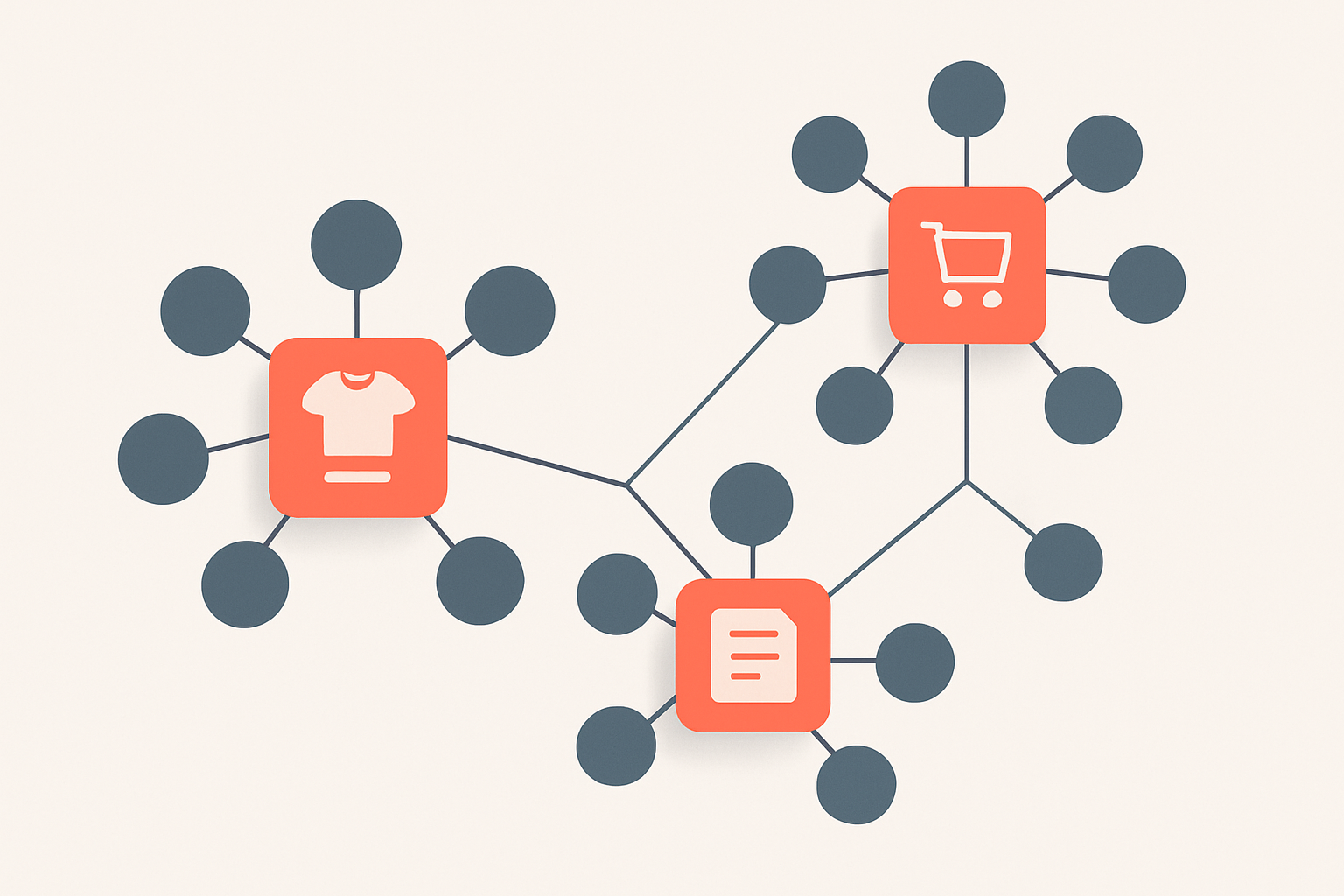
If you run an ecommerce store with 100+ SKUs, you already have a content problem you can’t see. Every category, collection, filter, and product page competes in search — and a fair number compete with each other. Topic cluster mapping for ecommerce brands with 100+ SKUs is how you stop that fight: you assign each search intent to exactly one page, then wire the rest of your content to support it.
Most cluster advice was written for blogs, where a pillar is a 3,000-word guide. That model breaks on a catalog. Your highest-value pages aren’t articles — they’re category pages with commercial intent. The pillar is usually a category; the clusters are the buying guides, comparisons, and how-tos that feed it. Get that backwards and your blog posts quietly steal rankings from the pages that convert.
Why 100+ SKUs changes the rules
- Filter pages multiply. A single category with a few filters generates thousands of URL combinations, most with zero demand, diluting equity.
- Intent collides. A category, a filter page, and a blog post can all target “buy winter tires.” Google rotates between them and rankings get unstable.
- Authority gets thin. Google rewards deep, focused topical coverage over broad, shallow catalogs. A pile of near-duplicate product pages is the definition of shallow.
The ecommerce cluster model: category as pillar
A cluster is hub-and-spoke: one pillar covering a broad topic, surrounded by cluster pages on subtopics, tied together with internal links. For a store, the hub is the page with the strongest commercial intent for the head term. The rule: a generic commercial term like “running shoes” → the category wins. A model or part number → the product page wins. A question like “how to clean running shoes” → a blog post wins, and it links up to the category. That last part is what most teams skip.
Map intent to page type before you write anything
| Pillar (page type) | Cluster topic | Page type | Target query |
|---|---|---|---|
| Hiking Boots (category) | Best hiking boots for wide feet | Buying guide (blog) | best hiking boots for wide feet |
| Hiking Boots (category) | Waterproof hiking boots | Filtered category (indexed) | waterproof hiking boots |
| Hiking Boots (category) | How to break in hiking boots | How-to (blog) | how to break in hiking boots |
| Tents (category) | 2-person vs 4-person tents | Comparison (blog) | 2 person vs 4 person tent |
| Tents (category) | Tent setup checklist | How-to (blog) | how to set up a tent |
“Waterproof hiking boots” gets its own indexed filtered category because it has real demand; every other filter combination canonicalizes to the parent or loads via AJAX so it never becomes a crawlable URL. And every blog cluster exists to send equity and readers to a category, not compete with it.
How to build the map for your catalog
- Export your categories and collections — these are your pillar candidates.
- Pull keyword demand per category. Head terms → category; long-tail commercial → indexed filter; questions → blog clusters.
- Assign one page per query. If two pages target the same term, pick the winner and point the loser’s links and content at it.
- Wire the internal links. Every cluster links up to its category; the category links down to its best supporting articles.
- Track whether the intended page ranks. If Google surfaces a blog post for a commercial term, your intent mapping is off.
One discipline to keep forever
Before any new product, collection, or article goes live, ask: which query does this own, and does anything else already own it? Google warns against “producing lots of content on many different topics in hopes that some might perform.” On a large catalog that’s the default failure mode. The map keeps you out of it.
Frequently Asked Questions
If you want a second set of eyes on your category-to-cluster map, book a call with The Reach Bureau and we’ll walk through your catalog together.
Ready to scale your e-commerce?
Let's discuss your project and how we can help you achieve your growth goals.