Editorial Content vs Programmatic SEO for Ecommerce: Which to Build First
July 17, 2026
4 min read
by Max Tymoshyn
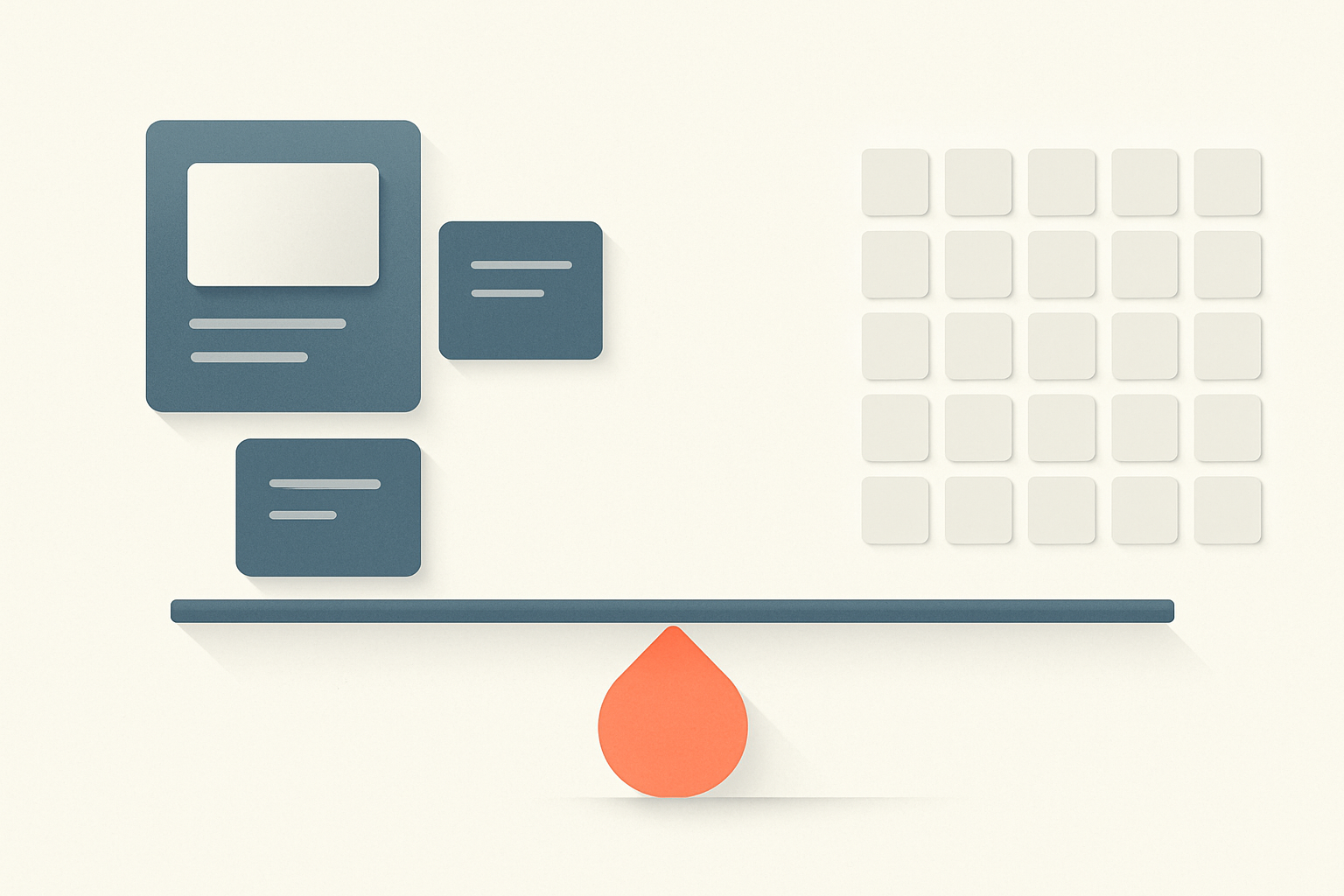
Every ecommerce brand reaches the same fork: you have budget for one content engine, and you have to choose. The editorial content vs programmatic SEO decision shapes the next twelve months of organic growth, and getting the order wrong is expensive. Build the wrong one first and you either burn months on pages Google ignores, or you publish thousands of thin pages that drag your whole domain down. Here is the straight version: most brands should build editorial first.
What each approach actually is
Editorial content is hand-made: a writer researches a topic, brings a point of view, and produces one deliberate piece — a buying guide, comparison, or how-to. Programmatic SEO is templated: you feed a structured dataset through one page template to generate hundreds or thousands of pages at once, like “best running shoes for [activity]” across fifty activities. Both can win. Editorial fails when it’s slow and thin on volume. Programmatic fails when it’s thin on substance — and that failure mode got far more dangerous in 2026.
Editorial content vs programmatic SEO: the head-to-head
| Factor | Editorial content | Programmatic SEO |
|---|---|---|
| Effort per page | High — research, writing, editing | Low per page, high upfront — data + template + dev |
| Scale | Tens of pages | Hundreds to thousands of pages |
| Risk | Low — quality is the default | High — thin-content and scaled-abuse penalties |
| Best for | Authority, top-of-funnel demand, link earning | High-intent long-tail with a real data asset |
| Time to results | 3–6 months, compounds steadily | Fast once indexed — if the domain has authority |
Why editorial usually goes first
Programmatic SEO works best on a domain Google already trusts — Wise and Zapier ran their plays from established sites. A new or mid-authority store that dumps 2,000 templated pages into the index is making a different bet, and often loses it. Editorial is how you build that trust: Google rewards content showing experience, expertise, and “original information, reporting, research, or analysis,” and hand-made guides earn the backlinks and brand searches that lift the entire domain — including the programmatic pages you publish later.
The 2026 risk that changes the math
In March 2026, Google’s scaled content abuse enforcement hit hard, targeting “generating many pages primarily to manipulate rankings, with little or no value.” Pure template-with-variable-substitution at scale was a top penalty pattern. John Mueller put it plainly in 2023: “programmatic SEO is often a fancy banner for spam” — though he added it isn’t always. The line between a programmatic asset and a doorway-page penalty is whether each page carries genuinely differentiated, useful data. That’s a high bar on a cold domain, and an easier one once editorial has established authority.
When to flip the order
Build programmatic first only when two things are both true: your domain already has authority, and you own a proprietary, structured dataset competitors don’t have — live inventory, real pricing, verified specs, genuine reviews. For most WooCommerce and Shopify brands that condition isn’t met on day one, so the sequence is: editorial first to build authority and earn links, then programmatic second — on top of that authority, powered by your product data — to capture long-tail intent at scale.
How to sequence them in practice
- Months 1–4 — build the editorial core. Ship 8–15 deep guides and comparisons; interlink them and point contextual links to priority category pages.
- Months 3–6 — earn authority signals. Use those guides to attract backlinks and brand searches.
- Months 5+ — prepare the data layer. Audit what proprietary, structured data you own; if it’s not differentiated, fix that first.
- Months 6+ — launch programmatic in controlled batches. Publish a few hundred pages, confirm indexing and ranking, then scale. Never dump the full set at once.
The bottom line
For the typical ecommerce brand, the editorial content vs programmatic SEO question has a clear answer: build editorial first. It carries low risk, builds the trust Google rewards, and creates the authority that makes programmatic safe to scale. Reverse the order only when you already have domain authority and a genuinely proprietary dataset. Skip the foundation and you’re betting your whole domain against Google’s spam systems — a bet most stores lose.
Frequently Asked Questions
Not sure which engine fits your catalog and domain authority right now? Book a call with The Reach Bureau and we will tell you which one to build first — and why.
Ready to scale your e-commerce?
Let's discuss your project and how we can help you achieve your growth goals.